
Artist Statement

His work is now presented internationally through exhibitions, publications, and Fine Art editions. His photographs have received recognition from leading photographic institutions and international awards, including Canon Laureate and Leica Laureate in PHOTO magazine’s “World’s Greatest Photo Contest,” a Gold Award at the Prix de la Photographie de Paris (PX3), and a Silver Award at the Tokyo International Foto Awards.
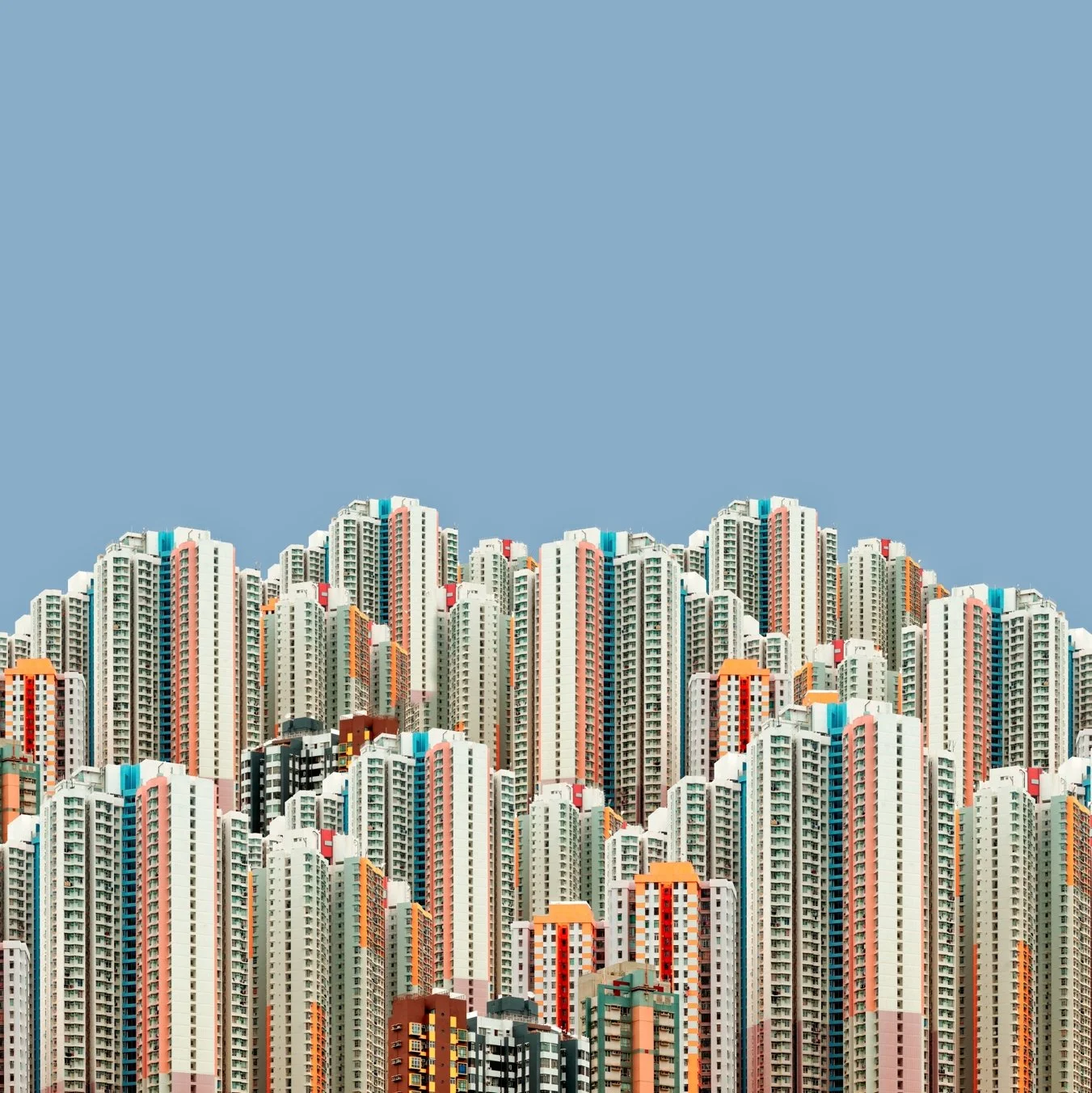
Order / Fragility

Geometry / Emotion
Silence / Abstraction
STRUCTURE / FRAGILITY
FROM REALITY TO ABSTRACTION
Across his series, José Antoine Costa transforms the subject into a visual language.
Lines become gestures.
Volumes become bodies.
Shadows become matter.
Spaces become silences.
In Human Hive, urban architecture evokes the structures of contemporary society.
In Red Wall, geometry and colour become photographic matter.
In Portraits from Nepal, the face becomes a space of presence and encounter.
From one series to another, a single question runs throughout his work:
What do we see when we look beyond what we believe we see?
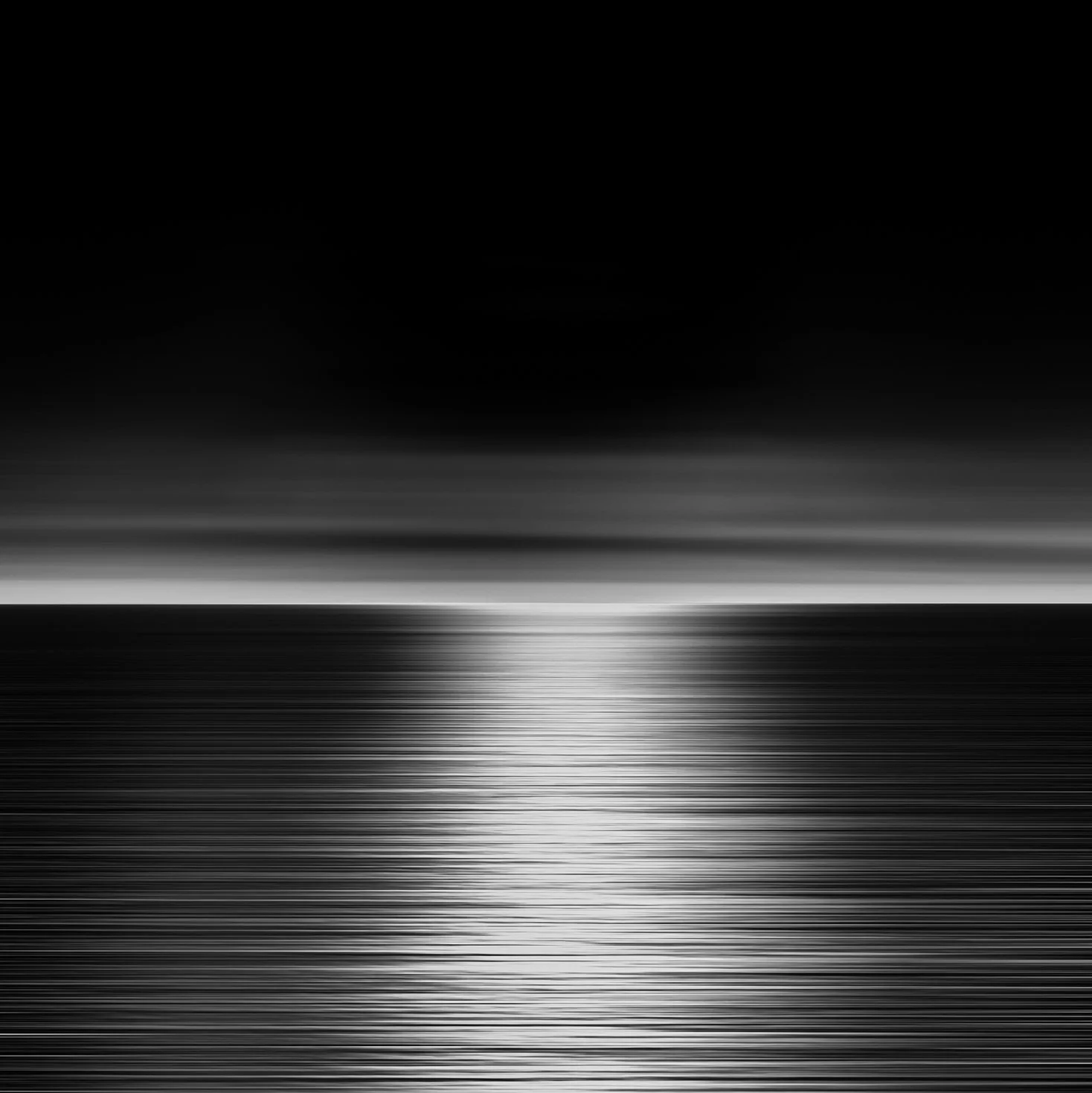
LOOK AGAIN
José Antoine Costa’s photography does not seek to impose a reading.
It invites you to look.
The first time, to see.
The second, to feel.
The third, to discover something else.
Look again.
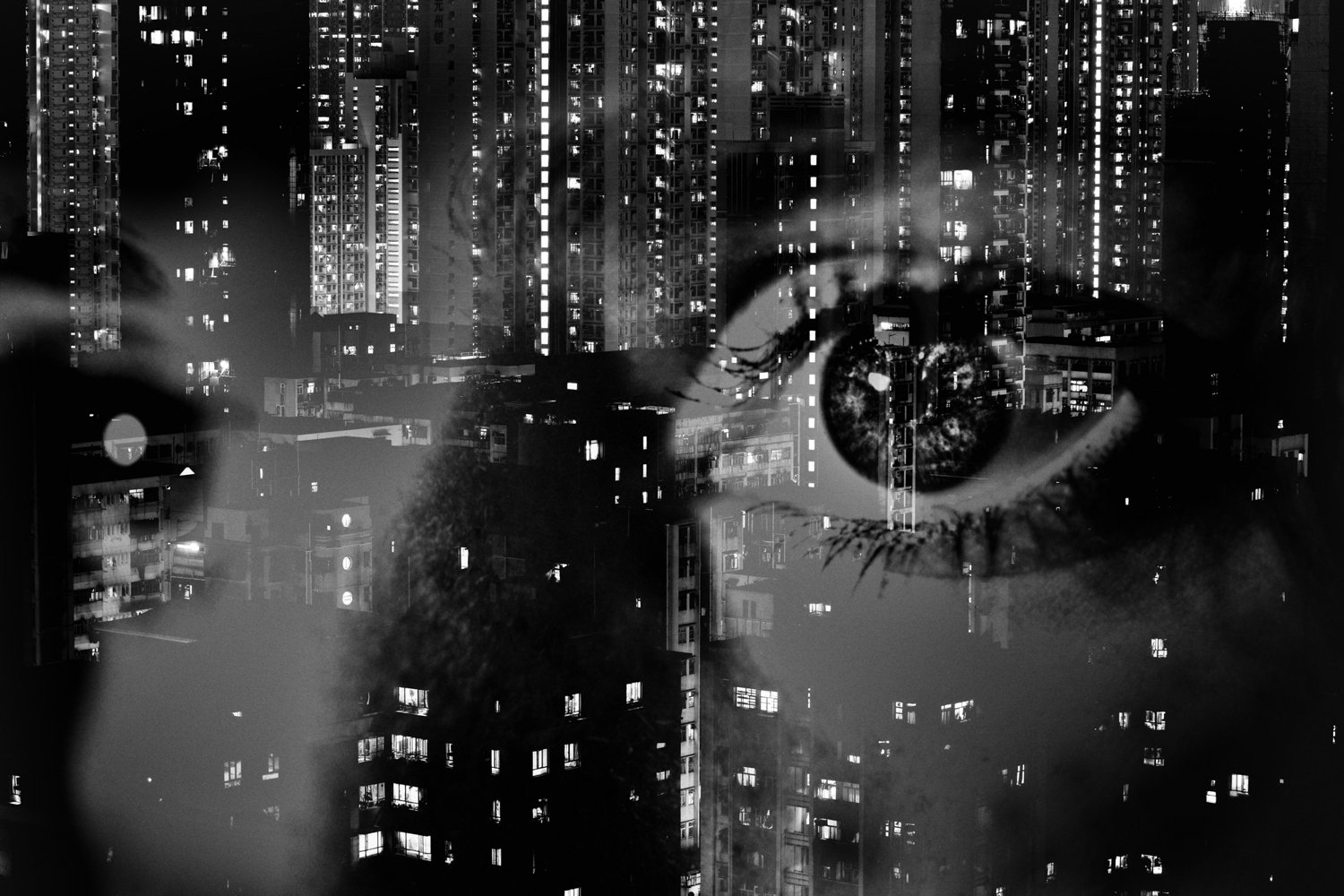
Presence / Absence
Born in Paris, where he lives and works, José Antoine Costa is a French Fine Art photographer whose practice explores the intersection of contemporary photography, architecture, and visual inquiry.
His relationship with art began in childhood, within an environment deeply rooted in painting, sculpture, drawing, and photography. At fifteen, he received his first camera, marking the beginning of a lasting fascination with the medium. What initially emerged as a passion gradually evolved, years later, into a distinctive artistic language.
Following a career in the corporate world, Costa ultimately chose to devote himself entirely to photography, transforming a lifelong engagement with the image into a fully realized artistic practice.
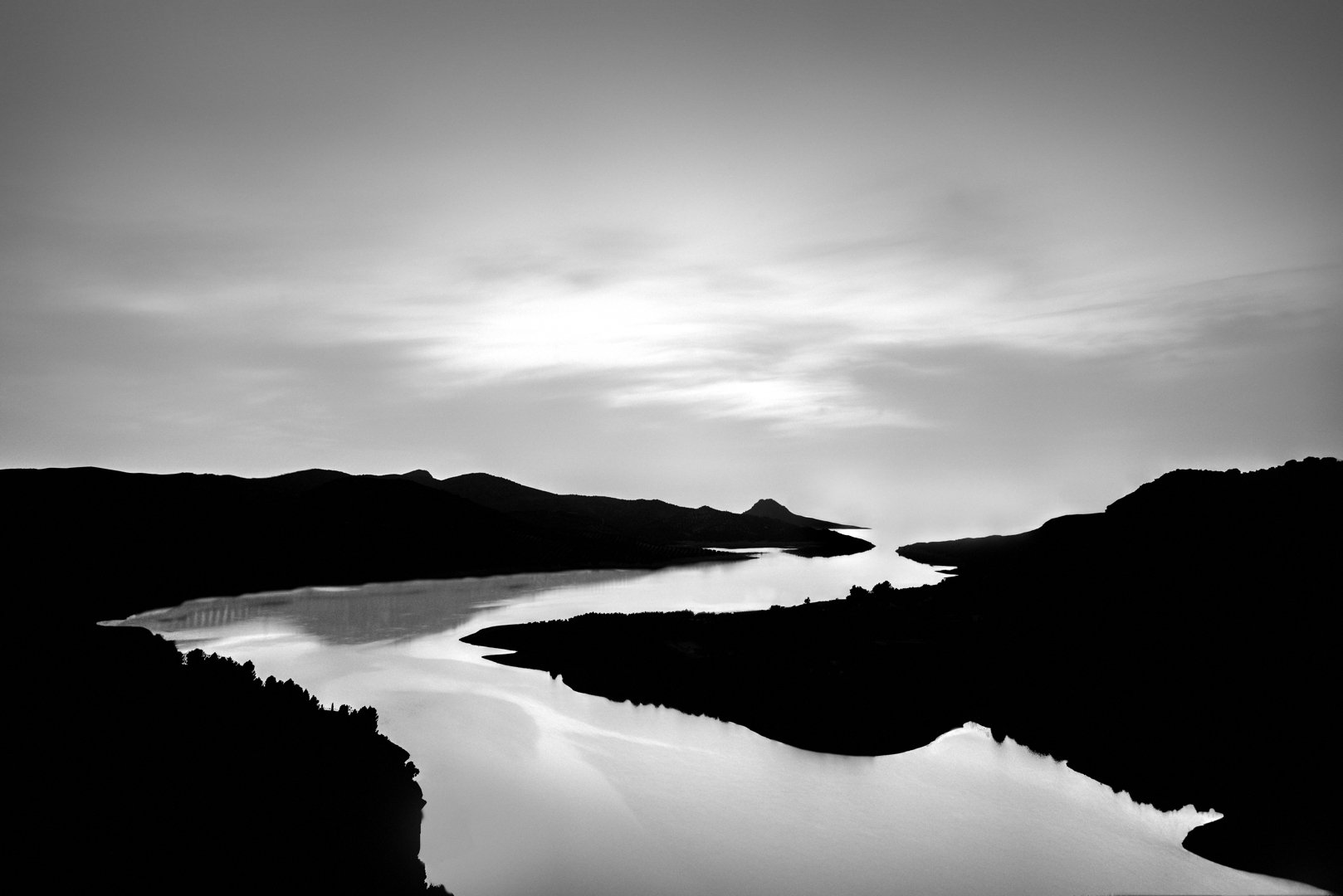
Reality / Abstraction
A PHOTOGRAPHY OF PERCEPTION
For José Antoine Costa, photography is not about reproducing reality, but about shifting our perception of it.
Architecture, cities, bodies, faces, landscapes, and spaces become fragments within an ongoing inquiry, in which reality gradually gives way to abstraction.
His work explores the tensions that run through the image:
geometry and emotion, order and fragility, beauty and imperfection, presence and absence.
His photographs seek less to depict than to evoke — a sensation, a question, a trace.
“Photography must first evoke an emotion. Only then comes interpretation, and with it, its reason for being.”
Reality / Abstraction

Minimalism / Abstraction
THE ARTWORK
Each photograph is conceived as a work in its own right, the result of a considered process of selection, framing, and visual construction.
The works are released in editions of 30, each numbered and signed, and accompanied by a certificate of authenticity.
Printed in France on Fine Art paper, they extend the experience of the image beyond the screen, bringing it into the physical space of the collector.

José Antoine Costa
“I photograph to disrupt the way we see.”
Reality / Abstraction

ARTISTIC INTENT
Vitruve
An Allegorical Counterpoint

With Vitruve, I do not deny its lineage to Leonardo da Vinci. On the contrary, I consciously draw upon the iconic posture of the Vitruvian Man while seeking to shift its meaning.
The woman is seen from behind, in three-quarter view, her profile emerging through her shadow. Caught in a moment of movement, her arms outstretched, she echoes the posture of Leonardo’s figure, yet inhabits a radically different symbolic space. She stands within a vibrant, contemporary geometric architecture that both frames and transforms her presence.
Through this gesture, Vitruve seeks to gently displace the anthropocentric symbolism of the Renaissance and the patriarchal worldview embedded within it, allowing another symbolism to emerge.
VITRUVE
Here, woman is not an idealized measure of the world, but a living presence within it—engaged, grounded, and deeply connected to the earth. Her body becomes a point of contact with elemental and cosmic forces, reclaiming its own agency and its place in the world.
Vitruve thus proposes a new mythology of the feminine: a woman who is a citizen of her own body, and of the world she inhabits.
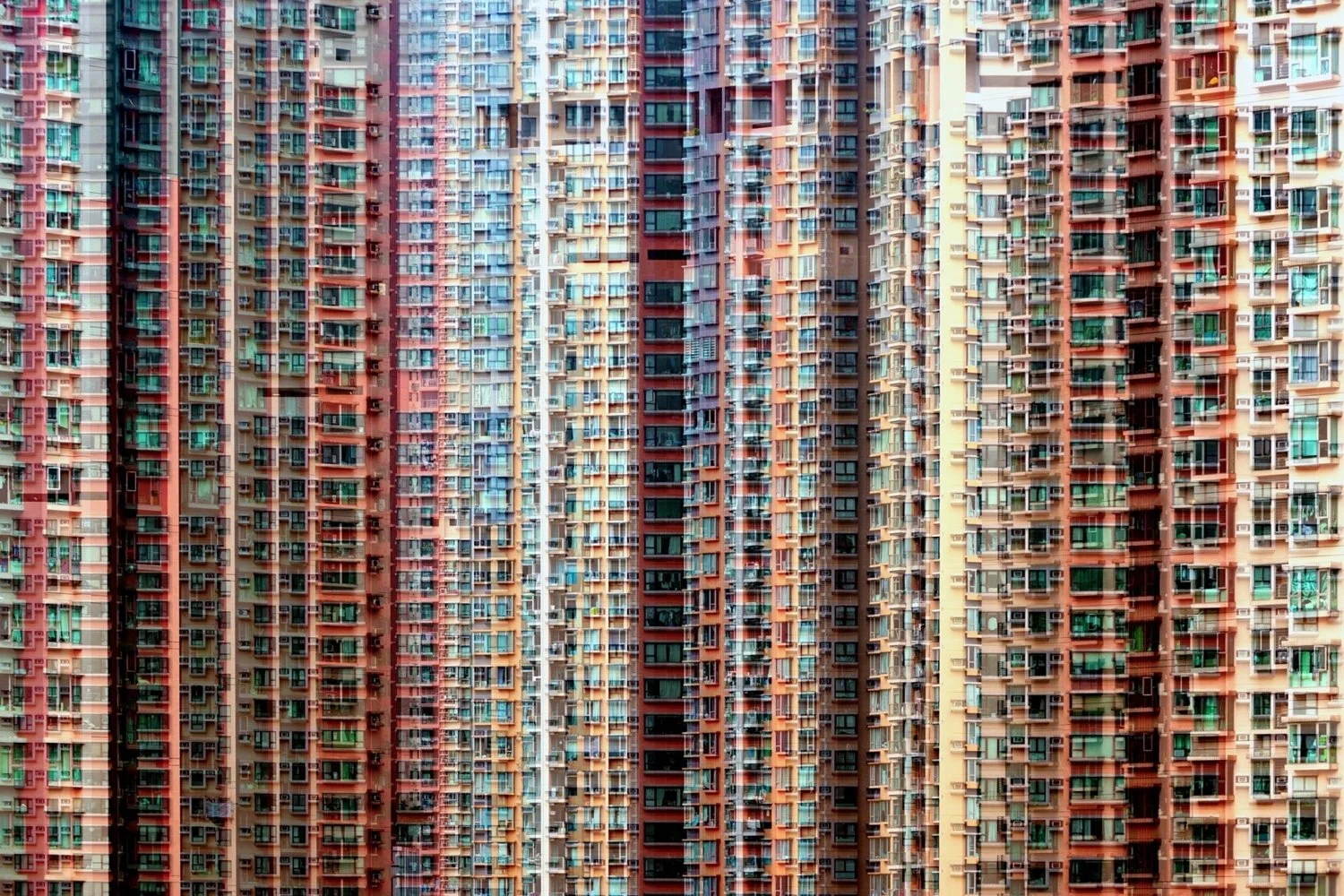
HUMAN HIVES
With Human Hives, I explore the transformation of our ways of living brought about by urbanization and the Industrial Revolutions.
Megacities have evolved into vast territories structured around distinct functions—living, working, moving and leisure. In their density and organization, these urban environments can evoke the logic of the insect world: repetition, cellular structures, circulation and collective behavior.
Through photography, I examine this unsettling proximity between the city and the hive. Architecture becomes a visual language of patterns, rhythms and geometric structures, where formal beauty coexists with a latent sense of confinement and alienation.
Human Hives offers an aesthetic and critical reading of the contemporary urban landscape, questioning the relationship between individual and collective, human nature and the environments we construct. Within these vast architectural organisms, the human being appears simultaneously as creator, inhabitant and constituent cell.
Hives II